
Book a truck or a bike for any inland load, priced upfront, tracked live and delivered with proof.
An AI-powered inland transportation marketplace for India. Shippers book a truck or a two-wheeler in minutes, see the fare before they confirm, follow the trip live, and download the invoice, lorry receipt and e-way bill from the same shipment. Fleet vendors, riders and drivers, and platform operators all work on that one record.
Every load moved — but the record of it was scattered.
Shippers, carriers, and drivers ran each load across phone calls, chat threads, and separate tools: a rate agreed verbally, a driver assigned by message, a location shared only when someone picked up, and an invoice, lorry receipt, and e-way bill in different inboxes. Leadership had no single view of acceptance, trips in motion, or platform earnings.
Slow quotes and disputed fares
Prices collected by phone were slow to arrive and easy to contest once the trip was done.
No visibility once the truck moved
Trip status turned into a series of calls to the desk.
GST exposure on the road
Goods moved before the e-way bill and lorry receipt were in hand.
Many fleets, no safe shared platform
The business needed to serve many shippers and fleets without mixing their drivers, vehicles, or shipments.
Client
Road-freight marketplace operator, India
Industry
Logistics & Freight
Integrations
Google Maps · Masters India · Firebase · Flutter
Engagement
Quote → settlement on one shipment record
What we learned before we designed anything
Findings from how shippers, fleet vendors, drivers, and operators actually move a load. They shaped every pricing, dispatch, tenancy, and advisory decision that followed.
The fare had to be the price you can book
Only a quote tied to the lane, the vehicle, and a short validity window stopped disputes after the trip.
Fleets join only if their data stays theirs
Each vendor's drivers, vehicles, and shipments had to be strictly isolated on a shared platform.
Invoice, lorry receipt, and e-way bill are three documents
Treating them as one created GST exposure. Each needed its own place on the same trip.
People wear more than one hat
An owner-driver may book as a shipper and drive as a driver, so one login had to hold several roles.
The field app can't assume good signal
GPS and proof of delivery had to stay usable on highways with uneven coverage.
AI earns trust by advising, not deciding
Operators wanted recommendations beside the record. Fares, bookings, and payments stay with rules and authorised people.
Phone brokerage and chat groups
Quick to start, but the fare, the dispatch, and the paperwork leave no shared record.
Load boards that stop at the match
Matching a load to a truck is where the job starts. Tracking, proof of delivery, and GST paperwork are often left to the parties.
Single-fleet transport software
Built for one carrier's operations, not a marketplace where many fleets share a platform without sharing data.
Neha
Logistics Manager · Mid-sized FMCG distributor (shipper)
Goals
- • See a fare she can book without calling around
- • Follow the truck without phoning the desk
- • Download the lorry receipt, invoice, and e-way bill from one place
Pain Points
- • Phone rates that change after the trip
- • Status that depends on someone answering
- • GST documents scattered across inboxes and drivers' paper copies
Five roles, one API, one shipment record.
Web portals for every role, a Flutter app for the field, and a public tracking link all call one FastAPI surface that checks the token, the role, and record ownership on every request. PostgreSQL is the system of record. AI advisory reads the same data as pricing and booking, but it never becomes a second source of truth.
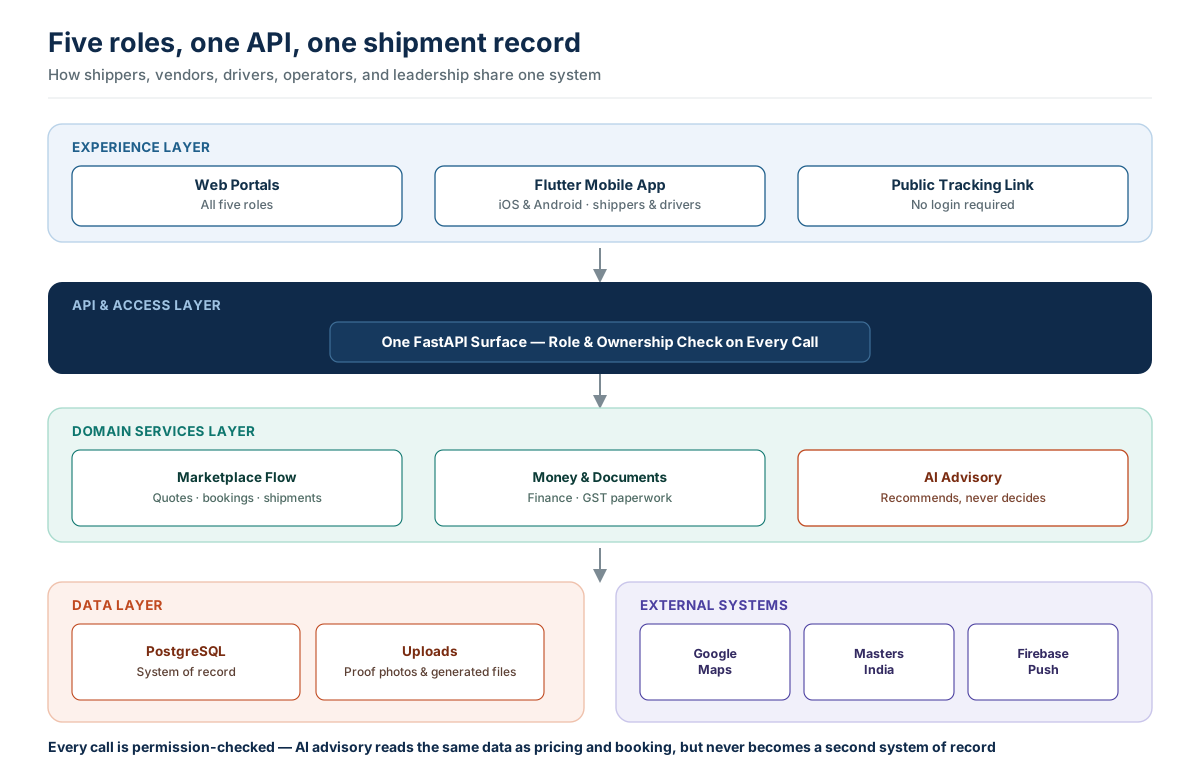
One connected marketplace, built around the trip.
Every party works on the same shipment, from the first quote through dispatch, delivery proof, GST documents, and settlement. Each role sees only what it is allowed to act on.
Rates were agreed by phone and drivers assigned by message, with no shared record of either.
From ranked quote to assigned driver, on one shipment
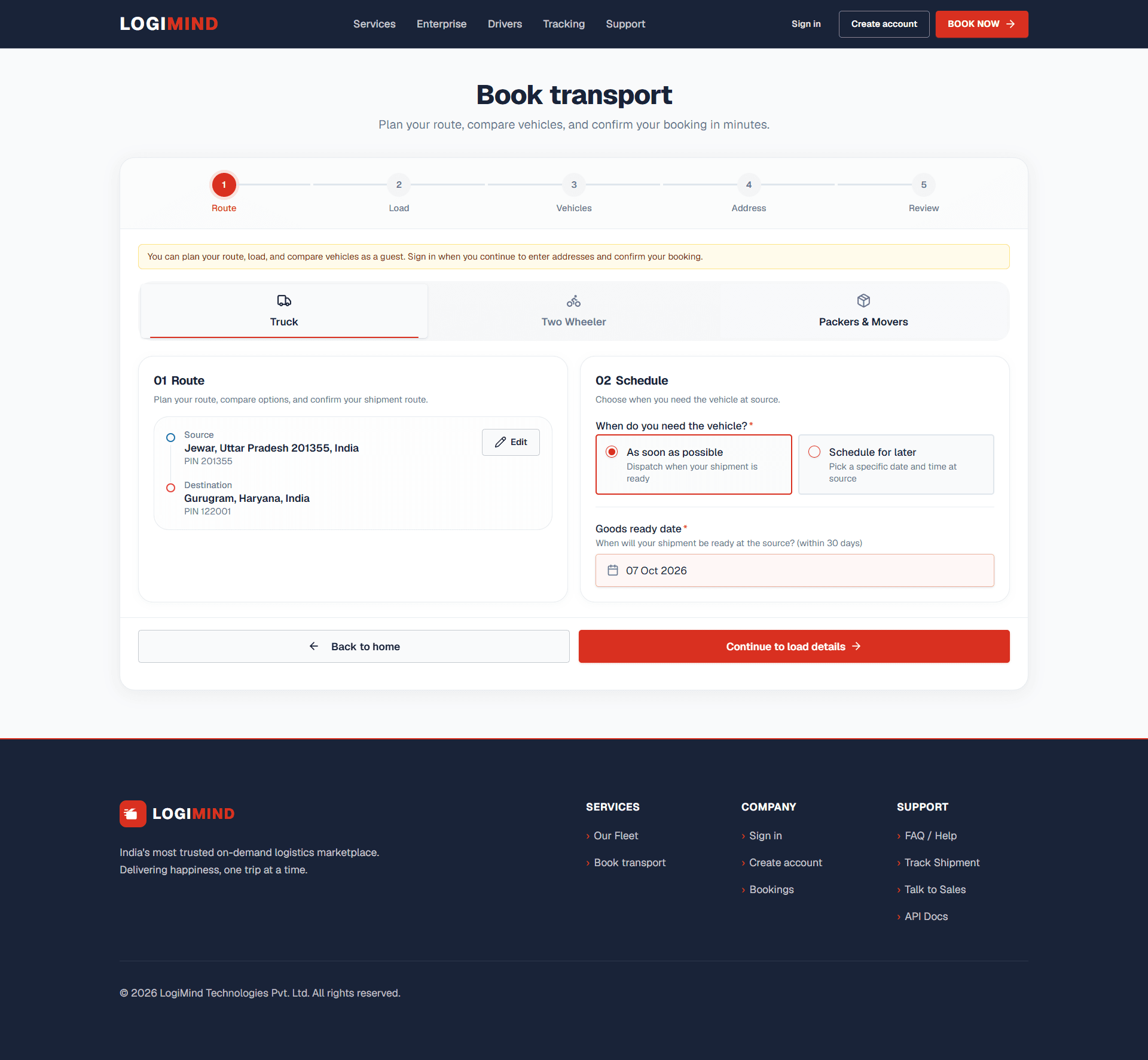
- ✓Route, load, optional extra stops, and GSTIN produce ranked vehicles with price, rating, capacity, and pickup timing
- ✓Vendor acceptance creates the shipment, and the driver and vehicle are assigned on that same record
Fares were set ad hoc and GST paperwork was assembled after the fact from scattered sources.
Rules-based fares and GST paperwork that travel with the load
- ✓Pricing rules for distance, slabs, zones, radius, flat rate, and fuel surcharge, simulated before they go live
- ✓Proof of delivery, lorry receipt, Masters India e-way bill, customer invoice, and vendor settlement with platform commission
There was no way to compare available vehicles or flag risk before a booking was made.
Recommendations from live marketplace data, never an invented fare
- ✓Up to ten available vehicles scored for capacity, truck category, temperature band, and rating, with an advisory cost from the same pricing engine
- ✓Alerts for vendor documents expiring within 30 days, plus risk notes for hazardous cargo, cross-border legs, and temperature mismatches
Once a truck left, status turned into a series of phone calls to the desk.
Live GPS, shareable tracking, and the trip in the driver's hand
- ✓GPS positions, a public tracking link with a map, support tickets, an audit log, and vendor and driver approval before they haul
- ✓One iOS and Android app: shippers book and follow, drivers update status, post GPS, and capture photo or signature proof
Built for a multi-party marketplace and a fleet that's always moving.
FastAPI, PostgreSQL, Flutter, Google Maps Platform, Masters India, Firebase, Docker, and Coolify. Chosen so the portal and the driver's phone call the same services, every shipment is permission-checked, and GST documents come from an authorised GST Suvidha Provider.
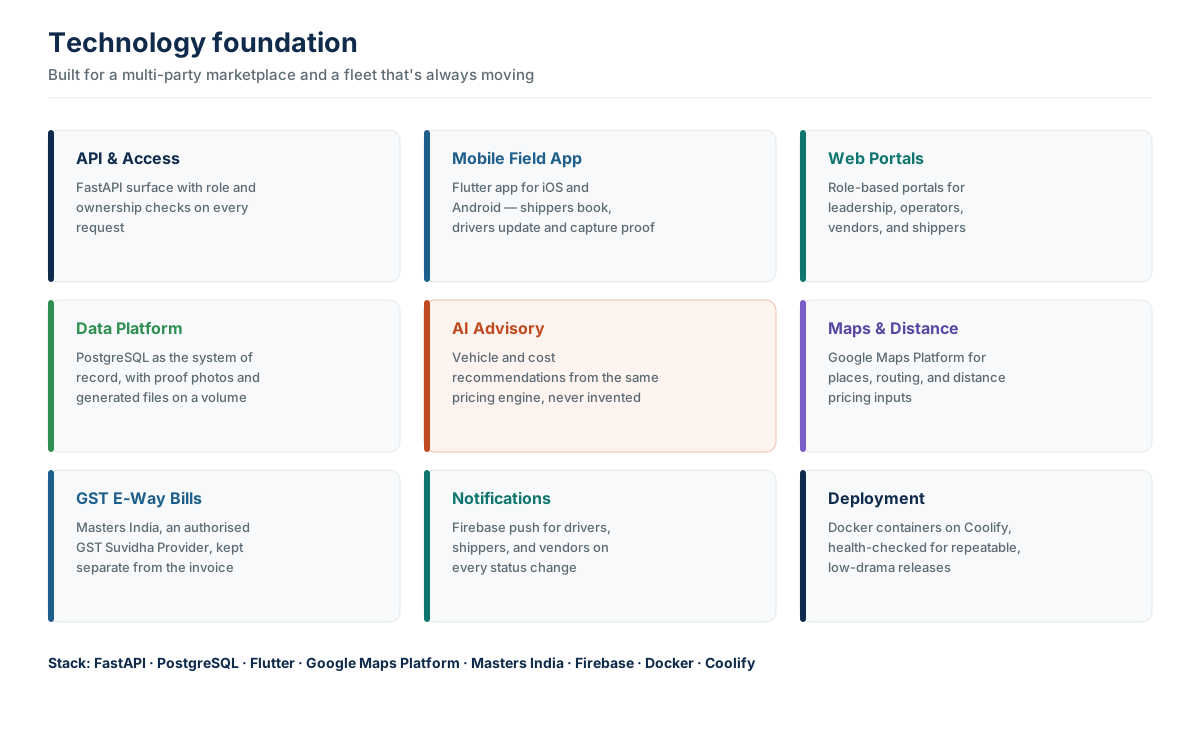
Record and access first, then portals, field, and GST.
The shipment record and access control came before everything else. A marketplace where one fleet could see another's trucks would not survive its first vendor.
Discovery & blueprint
Mapped the marketplace operating model, the five roles, and the trip from quote to settlement.
Shipment record & access control
Established the shipment record, signed sessions, role permissions, and an ownership check on every call.
Web portals & pricing console
Opened portals for leadership, operators, vendors, shippers, and drivers, with pricing rules that can be simulated before use.
Mobile for shippers & drivers
Put booking, tracking, GPS, proof of delivery, and documents into one Flutter app for iOS and Android.
GST documents & repeatable release
Connected Masters India e-way bills and shipped the API and web as health-checked containers on Coolify.
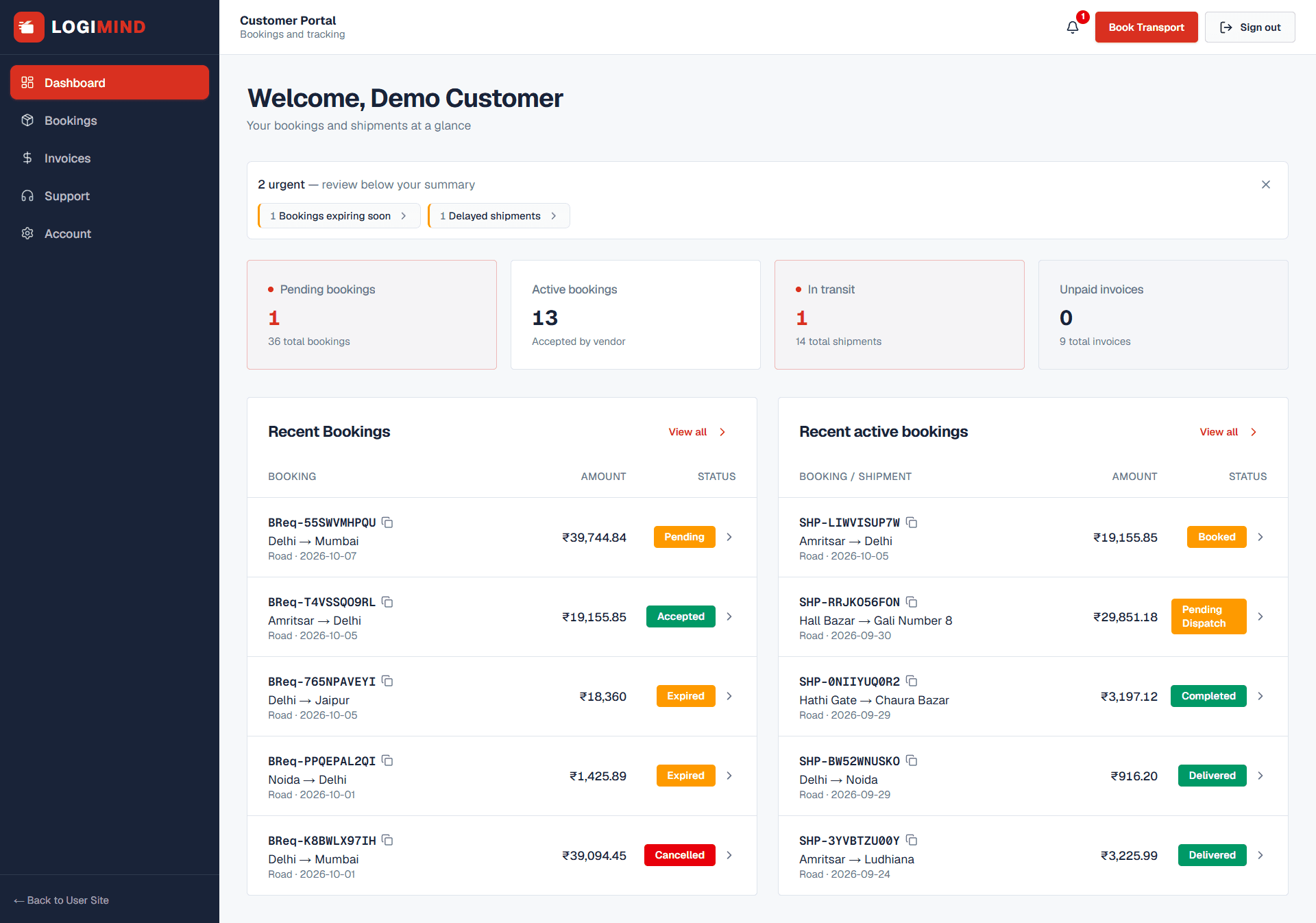
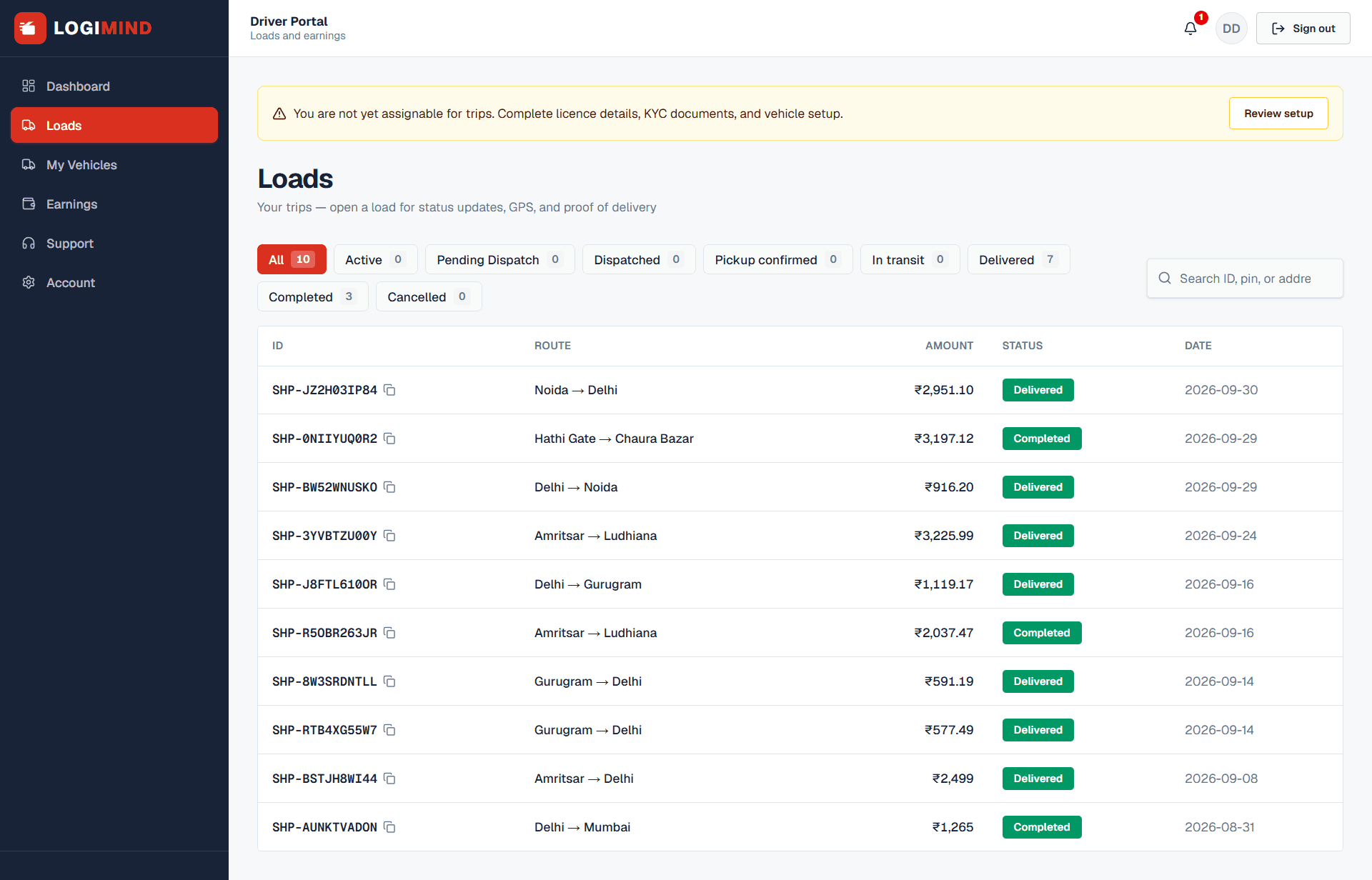
A load, from quote to proof
What changes with Logimind
Quotes in one screen, not a round of calls - Shippers compare ranked vehicles and book a fare they can see upfront.
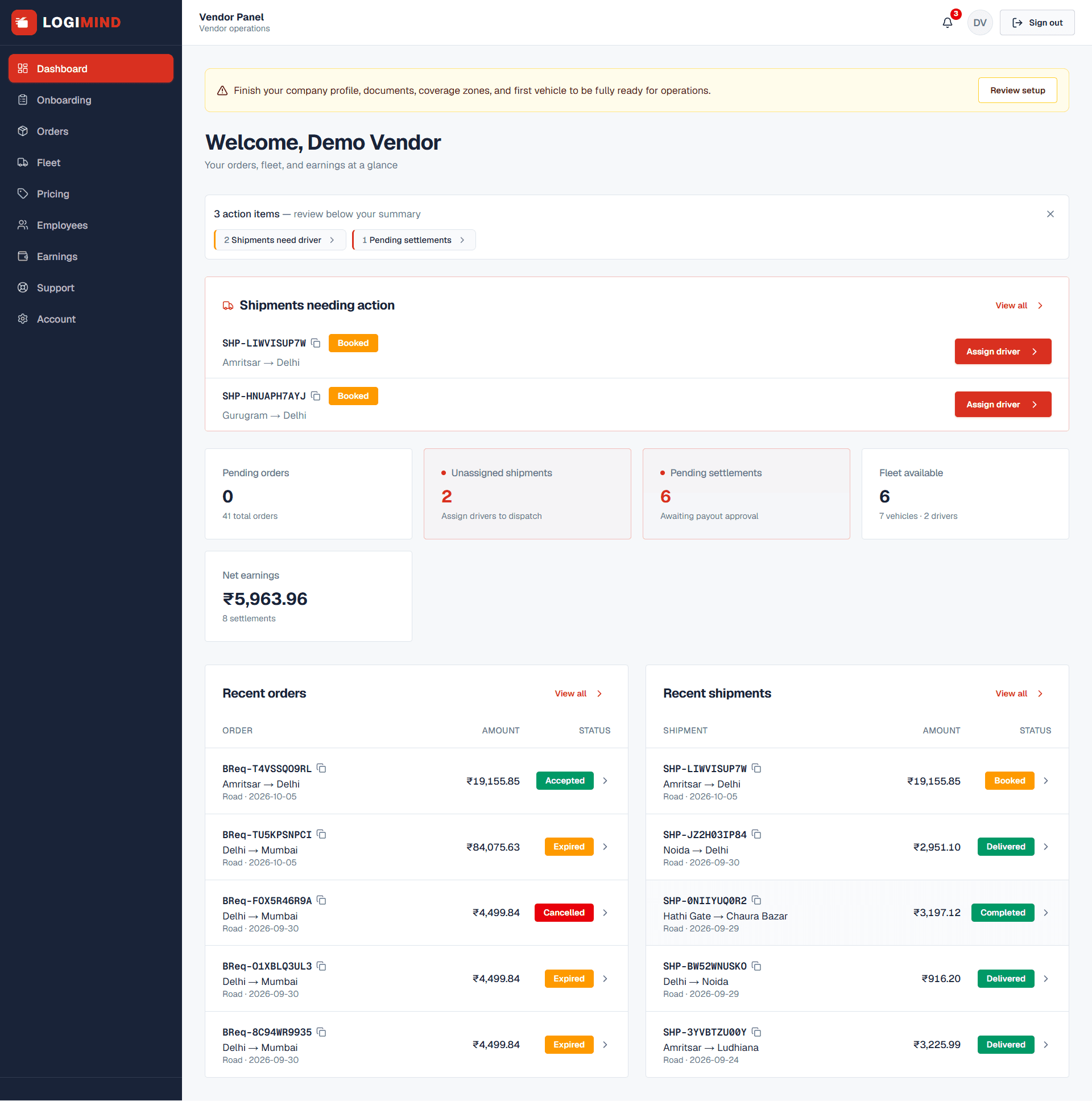
Dispatch on the record, not in chat - Vendors accept the booking and assign the driver and vehicle on that same shipment.
Status without chasing the desk - A shareable tracking link, live GPS, and in-app support take the place of status calls.
GST documents travel with the load - Lorry receipt, freight invoice, and e-way bill all open from the same trip.
One view of the whole network - Operators see onboarding, live trips, invoices, settlements, and commission without piecing them together from inboxes.
New fleets without mixing data - More vendors join after approval, and their drivers, vehicles, and shipments stay separate.
Challenges & Learnings
Tenant isolation on a shared marketplace
Role checks alone were not enough. Every shipment call also verifies that the user owns the record.
Keeping the fare honest
Tying each quote to the lane, the vehicle, and a short validity window kept the price on screen bookable.
Three documents, one trip
Freight invoice, lorry receipt, and e-way bill needed separate lifecycles, with the e-way bill gated on a complete goods invoice.
AI as a peer, not a system of record
Advisory reuses the pricing engine and labels every output advisory, so it can never override a published rule.
Designing for the highway
GPS and proof of delivery had to cope with uneven signal. A full offline sync queue is next on the roadmap.
Where Logimind goes from here
See the vehicles and the fare before you book, then follow the truck without calling the desk for a location.
“One trip, four points of view: a vendor accepts the booking and the shipment exists — assign your driver and vehicle on that job, and the settlement sits on the same record. A driver carries the load, the proof photo, and the papers on the phone, with no chasing the lorry receipt and e-way bill at the end of the day. A platform operator sees who is approved to haul, which trips are moving, and what the platform earns, without pulling it out of inboxes.”